
How to Use Home Equity to Pay for Aging in Place Modifications
Use home equity to pay for aging in place modifications and stay independent. Compare loans, HELOCs, and reverse mortgages for safety upgrades.

By Rachel Turner
If you are like most homeowners over 60, your house is more than just a place to live: it is your nest egg, your memory bank, and the setting for the next chapter of your life. But the same stairs you bounded up at 40 can become a daily obstacle at 70. Ramps, grab bars, and walk-in showers are not just nice-to-haves; they are essential for staying safe and independent. The problem is that these modifications cost money, and many retirees live on fixed incomes. The good news? You may be sitting on a pile of untapped wealth in the form of home equity, and you can use it to fund the changes that let you age in place comfortably. This guide walks you through how to use home equity to pay for aging in place modifications, from comparing loan products to picking the right contractor and deciding which upgrades are worth the investment.
Understanding Home Equity and Why It Matters for Aging in Place
Home equity is the difference between your home's market value and what you still owe on your mortgage. If your home is worth $400,000 and you owe $150,000, you have $250,000 in equity. That equity is a powerful financial tool, especially for older homeowners who have paid down their mortgages over decades. According to the National Council on Aging, nearly 90 percent of seniors want to stay in their homes as they age, yet many homes were not built with accessibility in mind. Narrow doorways, bathrooms without grab bars, and multi-level layouts can turn a beloved home into a hazard.
Using home equity to finance modifications means you do not have to drain your savings or rely on high-interest credit cards. You can borrow against the value you have built, often at lower rates than unsecured loans. The key is to choose the right borrowing option for your situation, because each has different repayment terms, interest rates, and eligibility requirements. Before you decide, it helps to understand the full landscape of home equity products and how they work. For a detailed breakdown of rates, costs, and smart uses, see our guide on home equity loans: rates, costs, and smart uses. That resource can help you compare offers and avoid surprises.
When you use home equity for aging in place modifications, you are essentially reinvesting in your own property to extend its useful life for you. Unlike a vacation or a luxury purchase, these improvements directly support your safety and independence. But not all modifications are created equal, and some may add more resale value than others. Later in this article, we will look at which upgrades tend to pay off and which are purely for comfort. First, let us explore the most common modifications you might need.
Common Aging in Place Modifications and Their Costs
Aging in place modifications range from simple, low-cost fixes to major structural changes. The right mix depends on your current mobility, your home's layout, and your budget. Here are some of the most common projects and what they typically cost:
- Ramps and zero-step entries: Installing a wheelchair ramp or converting a step to a gradual slope can cost $1,000 to $5,000, depending on materials and length.
- Widened doorways: Widening a doorway to 36 inches for wheelchair access typically runs $1,500 to $3,000 per door, including labor and drywall repair.
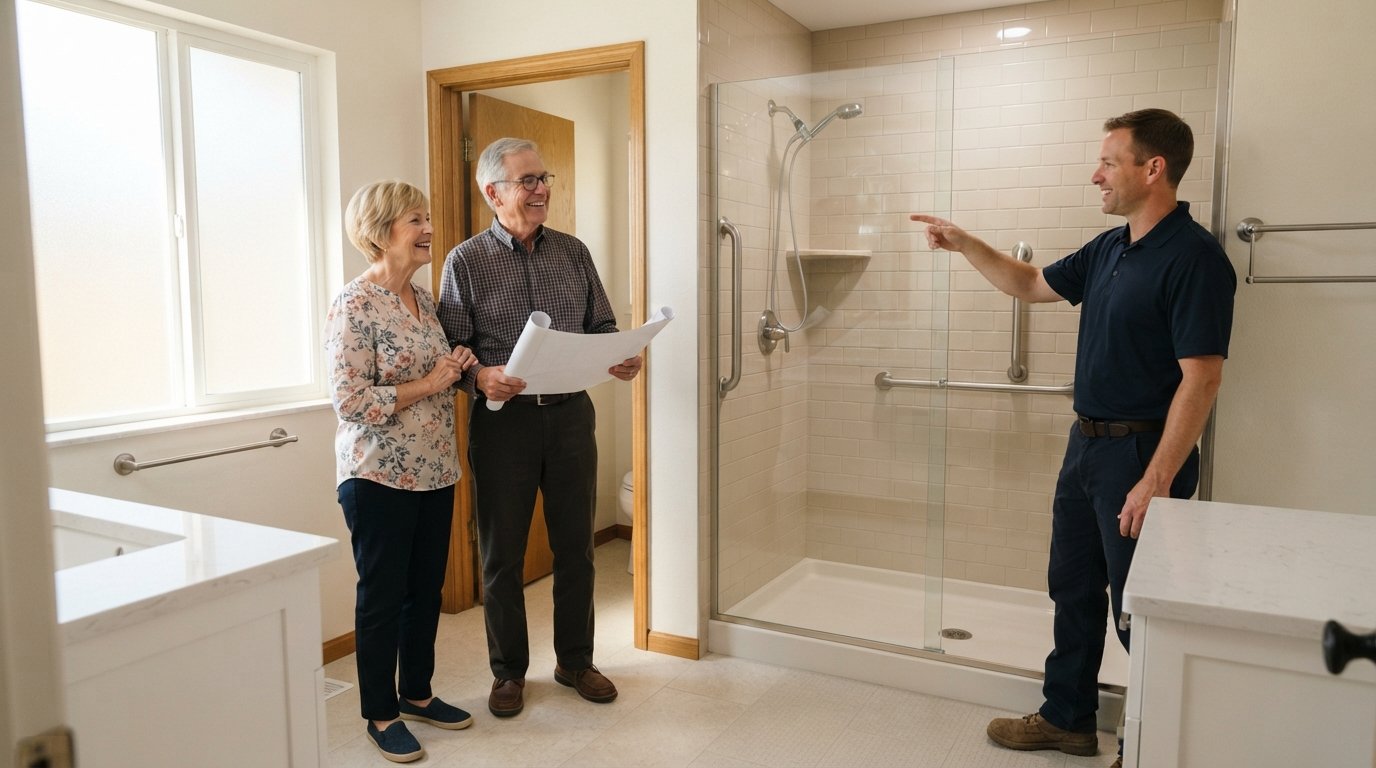
- Walk-in showers and tub conversions: Replacing a bathtub with a curbless shower or a walk-in tub costs $3,000 to $15,000, with walk-in tubs on the higher end.
- Grab bars and railings: A simple grab bar installation is $150 to $500 per bar, while stair railings on both sides can cost $500 to $2,000.
- Stair lifts or chair lifts: For multi-level homes, a stair lift can cost $2,000 to $5,000 installed, while a vertical platform lift can exceed $10,000.
These figures are national averages and vary by region, contractor availability, and material choices. It is wise to get multiple bids and to budget a 10 to 20 percent contingency for unexpected issues, especially in older homes. Also consider that some modifications, like widened doorways, may require permits and inspections, which add time and cost. The total bill can add up quickly, which is why financing with home equity is so appealing: you can spread the cost over time and keep your cash reserves intact for other expenses.
When planning your project, think about phasing: start with the most critical safety fixes (grab bars, lighting, rug removal) and then tackle larger projects as your budget allows. This approach reduces upfront strain and lets you test which modifications make the biggest difference in your daily life. It also gives you time to research contractors and financing options without pressure.
Comparing Home Equity Loan, HELOC, and Cash-Out Refinance
Once you have a rough budget, the next step is choosing how to tap your equity. Three main options are available to homeowners: a home equity loan, a home equity line of credit (HELOC), and a cash-out refinance. Each has distinct features, and the best choice depends on how much you need, how quickly you need it, and how you prefer to repay.
A home equity loan (sometimes called a second mortgage) gives you a lump sum at a fixed interest rate, repaid over a set term, typically five to 30 years. It is ideal if you have a clear project scope and want predictable monthly payments. Because the rate is fixed, you do not have to worry about rising payments if interest rates climb. Closing costs are usually lower than a cash-out refinance, and the application process can be faster. However, you start paying interest on the full amount immediately, even if you do not use all the money at once.
A HELOC works more like a credit card: you have a revolving line of credit with a variable interest rate, and you can draw funds as needed during the draw period (often 10 years), then repay over the repayment period. HELOCs are flexible for projects with uncertain costs or for phasing modifications over time. You only pay interest on what you borrow. The trade-off is that variable rates can rise, making payments less predictable. Some HELOCs also have annual fees or early-closure fees, so read the fine print.
A cash-out refinance replaces your existing mortgage with a new, larger loan and gives you the difference in cash. This option can be attractive if you can secure a lower interest rate than your current mortgage, because you refinance the entire balance at the new rate. However, closing costs are higher, and you are resetting your mortgage term, which could mean paying more interest over time. It also increases your loan-to-value ratio, which may affect your ability to borrow in the future. Cash-out refinancing works best if you have a significant amount of equity and can qualify for a competitive rate.
To summarize the key differences, consider this comparison:
- Home equity loan: Fixed rate, lump sum, predictable payments, good for defined projects.
- HELOC: Variable rate, draw as needed, flexible for phased work, but payments can fluctuate.
- Cash-out refinance: Replaces first mortgage, potentially lower rate on entire balance, higher closing costs, resets term.
If you are unsure which product fits your needs, it may help to speak with a housing counselor or financial advisor who specializes in retiree finances. They can help you run the numbers and avoid overborrowing. Also keep in mind that lenders will evaluate your income, credit score, and debt-to-income ratio, so it is smart to check your credit report and address any errors before applying.
How a Reverse Mortgage Fits for Homeowners 62 and Older
For homeowners aged 62 or older, a reverse mortgage is another option that can fund aging in place modifications without requiring monthly mortgage payments. The most common type is a Home Equity Conversion Mortgage (HECM), which is federally insured. With a reverse mortgage, you borrow against your home equity and receive funds as a lump sum, monthly installments, or a line of credit. The loan does not need to be repaid until you move out, sell the home, or pass away. This can free up cash flow for modifications and other expenses.
However, reverse mortgages are not for everyone. They come with upfront costs, including mortgage insurance premiums and origination fees, and the balance grows over time because interest accrues. You must also continue to pay property taxes, homeowners insurance, and maintain the home. Failure to do so can lead to foreclosure. To qualify, you must own your home outright or have a small mortgage balance, and you must attend a consumer education session with a HUD-approved counselor. For some seniors, a reverse mortgage provides a safety net that allows them to stay in their home while preserving other savings. For others, the costs and complexity may outweigh the benefits.
If you are considering a reverse mortgage, compare it carefully with a home equity loan or HELOC. A reverse mortgage may be more expensive upfront but offers no monthly payments, which can be a relief for those on fixed incomes. A home equity loan, by contrast, requires monthly payments but may have lower overall costs and simpler terms. Your choice should hinge on your cash flow, how long you plan to stay in the home, and your comfort with the loan structure. It is always wise to consult a financial advisor who understands reverse mortgages before proceeding.
For those who want to explore reverse mortgage options and compare quotes from multiple lenders, platforms like Express Mortgage Quotes can provide educational resources and connect you with verified lenders. They also offer tools for home equity loans and lines of credit, making it easier to see which product aligns with your goals.
Budgeting and Contractor Vetting for Accessibility Projects
Once you have chosen a financing option, the next critical step is budgeting and hiring a qualified contractor. Accessibility modifications require specific expertise: a general contractor may not be familiar with ADA guidelines or universal design principles. Start by creating a detailed budget that includes not just construction costs but also permits, inspections, and a contingency fund. Get at least three written estimates from contractors who have experience with aging in place projects. Ask for references and photos of similar work they have completed.
Before signing a contract, verify the contractor's license, insurance, and bonding. Check with your state's licensing board and the Better Business Bureau for any complaints. Make sure the contract spells out the scope of work, materials, timeline, payment schedule, and warranty. Avoid paying more than one-third upfront, and never pay in cash without a receipt. For larger projects, consider hiring an occupational therapist or aging in place specialist to assess your home and recommend specific modifications. Their input can prevent costly mistakes and ensure the finished project truly meets your needs.
Also think about permits: many accessibility modifications, such as ramps and widened doorways, require building permits. Your contractor should handle the permitting process, but you should verify that the proper permits are pulled. If you skip permits, you could face fines or have to redo the work when you sell the home. Finally, keep a detailed record of all expenses and improvements. This documentation can be valuable for tax purposes (if you itemize medical expenses) and for proving the value of your home when you sell.
Which Upgrades Add Resale Value and Which Rarely Do
Not all aging in place modifications are equal when it comes to resale value. Some improvements, like widened doorways and walk-in showers, can appeal to a broad range of buyers, especially as the population ages. Others, like stair lifts, are highly personal and may not add value because they can be difficult to remove or may signal that the home is not suitable for everyone. Here is a quick guide to help you prioritize:
- Typically add value: Zero-step entries, widened doorways, walk-in showers with grab bars, and improved lighting. These are seen as modern, accessible features that benefit all residents.
- May add value if done well: Ramps (if aesthetically integrated), lever-style door handles, and non-slip flooring. These are low-cost and broadly appealing.
- Rarely add resale value: Stair lifts, ceiling track lifts, and medical-style grab bars that are not stylishly integrated. These are often removed by buyers or seen as clutter.
Keep in mind that resale value should not be your primary motivation for aging in place modifications. The main goal is your safety and comfort. However, if you plan to sell eventually, choosing modifications that are universally designed and visually appealing can help you recoup some of the cost. For example, a curbless shower with a bench and stylish grab bars looks like a luxury spa feature and appeals to buyers of all ages. A stair lift, by contrast, is a mechanical device that many buyers will want removed.
If you are unsure which modifications will add value in your neighborhood, consult a local real estate agent. They can tell you what buyers in your area expect and which upgrades are worth the investment. Also consider that some modifications may qualify for tax deductions if they are medically necessary. Talk to a tax professional to see if you can deduct the cost as a medical expense.
Putting It All Together: A Step-by-Step Plan
Now that you understand the options, here is a practical step-by-step plan to use home equity for your aging in place modifications:
- Assess your needs: Walk through your home with an occupational therapist or aging in place specialist to identify hazards and prioritize modifications.
- Get cost estimates: Obtain bids from at least three licensed contractors who specialize in accessibility work.
- Determine your equity: Use a home equity calculator or contact a lender to find out how much you can borrow.
- Compare loan products: Evaluate home equity loans, HELOCs, cash-out refinances, and reverse mortgages based on your age, income, and project timeline.
- Apply and close: Submit your application, provide required documentation, and complete the closing process.
- Hire and manage contractors: Vet contractors carefully, sign a detailed contract, and monitor the work to ensure quality and safety.
- Complete the modifications and enjoy your safer home.
Each step builds on the previous one, so take your time and do not rush. It is also wise to revisit your plan annually or whenever your health needs change. What works today may not work in five years, so consider phasing modifications over time and leaving room in your budget for future updates.
Finally, remember that you are not alone in this process. Many communities have Area Agencies on Aging that offer free home safety assessments and referrals to trusted contractors. Nonprofit organizations like Rebuilding Together also help low-income homeowners with accessibility modifications. Explore these resources before tapping your equity, as they may reduce the amount you need to borrow.
Using home equity to pay for aging in place modifications is a smart way to invest in your safety and independence. By understanding your options, budgeting carefully, and choosing the right professionals, you can transform your home into a comfortable, accessible haven for years to come.